
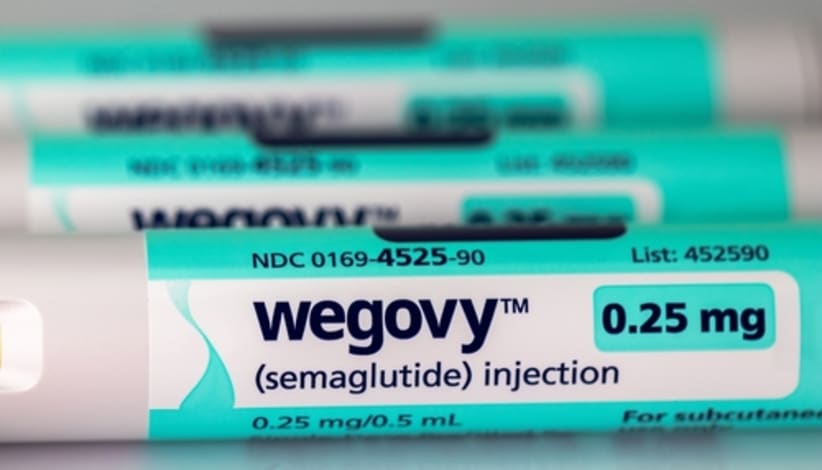
After spending years (and billions) turning the active ingredient in Ozempic into the backbone of its blockbuster diabetes and weight‑loss lineup, pharma company Novo Nordisk now says a popular telehealth startup has been riding its coattails — with unapproved “compounded” versions of the very same drug. And just this week, Novo took the matter to patent court.
Semaglutide’s Long Road to Market
If you haven’t heard of semaglutide or GLP‑1 receptor agonists, you’ve probably heard of its generic name, Ozempic. This class of drugs mimics hormones involved in blood sugar control and appetite, and goes by several other brand variants such as Wegovy and Rybelsus. What all these weight loss meds have in common is a single parent company: Novo Nordisk.
Novo casts itself as the company that did the heavy lifting to turn GLP‑1 science into blockbuster medicines. The drugmaker claims it invested decades of research and “billions of dollars” in the discovery of semaglutide, the active ingredient in all those brands rumored to be transforming your favorite celebrities into unrecognizably thinner versions of themselves.
Importantly, Novo jumped through a lot of government hoops to get its patented product to market. The company vetted the drugs through the traditional Food and Drug Administration (FDA) pathway, supported by large clinical trials and manufactured under strict current good manufacturing practices.
Orange You Glad You Patented That?
All of Novo’s hard work navigating red tape paid off when it became the sole company with core semaglutide patents formally listed alongside its drugs in the FDA’s Orange Book, the agency’s official reference for approved drug products.
The Orange Book pairs each brand‑name medicine with key information about its active ingredients, dosage forms, and any patents the sponsor says cover that approved product. Only certain patents — those that claim the active ingredient, the approved formulation, or an approved method of use — are supposed to be listed in the Orange Book.
When a patent is listed in the Orange Book, it’s a way of telling the world, particularly other drug companies, that the brand‑name manufacturer believes that the patent covers its approved drug. Generic manufacturers who want FDA approval before patent expiry have to certify against each Orange‑Book‑listed patent, which often triggers a patent suit and a regulatory stay. All that is to say, the rest of the pharma world was on alert that Novo had exclusive rights to manufacture semaglutide products.
Nonetheless, a telehealth company called Hims & Hers stepped into the booming GLP‑1 market with its own compounded version of semaglutide injections and pills — products Novo says infringe on its hard-earned IP.
Novo Sues Copycat Company
In a lawsuit launched on Monday, Novo argues that Hims knew exactly what patent minefield it was walking into. The complaint cites investor calls in which Hims’ CEO openly discussed GLP‑1 patent cliffs and noted that drugs like liraglutide were going “off patent,” while semaglutide was not. At the very least, Novo says, Hims had actual notice by February 8, 2026, when Novo’s general counsel sent a letter to Hims’ demanding that they stop infringing … and, of course, the lawsuit filed the next day.
Novo doesn’t just take aim at the copying; it takes aim at the way Hims & Hers markets their copycat drugs. In Novo’s telling, customers arrive at hims.com or forhers.com, complete online health questionnaires, and are then routed to affiliated medical groups that practice through the telehealth platform.
Those clinicians, Novo says, prescribe compounded semaglutide where “medically appropriate,” and patients pay Hims directly on a subscription basis. Affiliated pharmacies then fill and ship semaglutide vials or pills—often in Hims‑branded packaging—while Hims publishes videos and how‑to guides showing patients how to self‑inject at home.
FDA Cracks Down on Wegovy Pill Knockoff
On February 5, Hims rolled out a pill that contained the same active ingredient as Wegovy — for a third of the cost.
Within days, the FDA publicly warned that it planned to “take decisive steps to restrict GLP‑1 active pharmaceutical ingredients (APIs) intended for use in non‑FDA‑approved compounded drugs” being mass‑marketed as alternatives to approved GLP‑1 products, explicitly naming Hims & Hers along with other companies. Not long after, the General Counsel of HHS announced that he had referred Hims to the Department of Justice for potential Food, Drug, and Cosmetic Act and criminal violations.
Hims then said it would stop offering the weight-loss pill in light of FDA’s warning, but Novo alleges the pill remained visible on Hims’ site even after that announcement.
Two Patent Theories
Central to Novo’s complaint is U.S. Patent No. 8,129,343, titled “Acylated GLP‑1 Compounds.” We’ll refer to it as “the ’343 Patent.” This patent claims the specific molecular structure of semaglutide and methods of using semaglutide‑containing pharmaceutical compositions.
Novo Nordisk claims that Hims & Hers infringed the ’343 Patent in multiple ways. For direct infringement, Novo alleges that Hims’ compounded GLP‑1 injections and pills all contain semaglutide and therefore fall within at least claim 1 of the patent. By making, using, offering for sale, and selling those products in the U.S. without permission, Hims is said to be directly infringing.
For induced infringement, Novo says Hims orchestrated and encouraged infringement by working with API suppliers, compounding pharmacies, affiliated medical groups, prescribers, and patients, and by marketing and instructing on the use of semaglutide‑containing products.
Novo is asking for at least a reasonable royalty, enhanced damages for willful infringement, attorneys’ fees, and a court order permanently barring Hims from making or selling any semaglutide product covered by the ’343 Patent.
What to Expect
For now, all of this is still at the allegation stage. Hims & Hers has already shelved its pill after FDA and HHS signaled a broader crackdown on mass‑marketed compounded GLP‑1s, and it’s promised to fight Novo’s claims in court.
Novo, for its part, has been filing similar actions against other compounders and shows no sign of backing off. In the meantime, patients and providers who turned to compounded GLP‑1s to get around shortages or costs may find those options shrinking.
Related Resources
- GLP-1 Drugs Like Ozempic Face Vision Loss and Gastrointestinal Injury Claims (FindLaw’s Courtside)
- Novo Says 'No, No' to Copycat Companies Making Ozempic (FindLaw’s Law and Daily Life)
- Employer Health Insurance Coverage Dropping Weight-Loss Drugs Like They're Carbs (FindLaw’s Law and Daily Life)


