
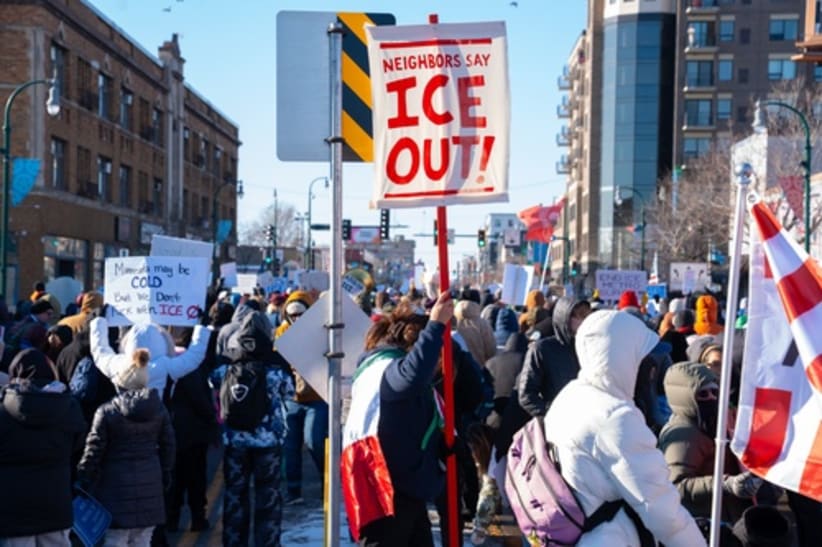
No one needs reminding that there has been a lot going on in Minneapolis. We previously wrote about legal paths available to Renee Good’s family in the wake of her shooting on January 7. Just over two weeks later, Alex Pretti was also killed on the street by federal officers.
The fatal shootings of protestors have increased the national controversy regarding the unprecedented immigration enforcement actions underway across the nation. However, it is not just widespread protests that oppose the federal government’s aggressive enforcement tactics. Various lawsuits regarding Operation Metro Surge, the controversial federal enforcement action underway across Minnesota, are also pending.
While there is no exact count, it is estimated that at least hundreds of habeas petitions are proceeding that contest individual detentions, more than were filed in all of 2025. A habeas petition is a petition filed in federal court alleging a person is in custody in violation of their constitutional rights. This is notable because of a potential contempt of court order expected to be taken up in a hearing on Friday, January 30. More on that later in the blog.
First, let’s revisit ongoing criminal investigations and examine several notable federal lawsuits challenging the broader legality of Operation Metro Surge.
A Quick Note on Criminal and Civil Liability
The same considerations regarding civil and criminal liability for Jonathan Ross, who shot Renee Good, apply to the as-yet unidentified officers who shot Pretti. However, unlike in the Good case, politicians from both parties have called for a clear investigation by DHS. As yet, however, the federal government has sharply limited Minnesota officials' ability to investigate.
The Justice Department’s Civil Rights Division has stated it will not open a civil rights investigation into Good’s death, and career staff were reportedly told the division would not investigate either killing. Shortly after Good’s death, several federal prosecutors in Minnesota resigned after being pressed by senior DOJ officials to investigate Good’s widow instead of the ICE agent who shot her.
Currently, ICE’s Homeland Security Investigations unit is leading the federal investigation into Pretti’s shooting, an unusual choice given that HSI is being asked to investigate agents from a different DHS component, Border Patrol. Lawmakers from both parties have called for greater transparency and questioned whether ICE can credibly investigate the shooting, especially after senior DHS officials publicly likened Good and Pretti to domestic terrorists within hours of each killing.
Challenging Operation Metro Surge
On Monday, January 26, Minnesota and the federal government argued their cases over the constitutionality of the federal enforcement action, which is taking place despite repeated pleas for ICE to leave the state from local officials, police departments across the metro area, local businesses, and large corporations headquartered in Minnesota.
Filed on behalf of the State of Minnesota by Attorney General Keith Ellison, the City of Minneapolis, and the City of St. Paul against Department of Homeland Security (DHS) Secretary Kristi Noem and other federal officials, the complaint claims that Operation Metro Surge violates the First and Tenth Amendments of the U.S. Constitution.
Minnesota argues that the Trump administration is violating the equal sovereignty principle and the Administrative Procedure Act. The Supreme Court recognized equal sovereignty under the U.S. Constitution in Shelby County v. Holder, holding that U.S. states are "equal in power, dignity, and authority.” Minnesota argues that the federal government has treated the state disparately from other states due to its not voting for Trump. The plaintiffs are asking for a federal judge to halt Operation Metro Surge in Minnesota and stop the deployment of the thousands of federal immigration agents currently in the state
An Unprecedented Ask in Unprecedented Times
Federal U.S. District Court Judge Katherine Menendez presided over the hearing. The requested relief is extraordinary. Minnesota is asking Judge Menendez to issue an order that would pause the DHS surge in Minnesota.
Recently, the Trump administration has pledged to reduce the number of ICE and CBP officers in the state. However, this order would require the federal government to act and would not depend on ongoing political discussions among the White House, Minnesota Governor Tim Walz, and Minneapolis Mayor Jacob Frey.
Minnesota argued the request is required due to the unique situation unfolding that has led to the deaths of two protesters. The federal government responded that issuing such an order would require federal authorities to stop enforcing federal laws, which it calls “absurd.”
At the hearing, Judge Menendez acknowledged the need for a quick resolution but said she would take the time needed and that “I’m doing everything I can to get it right.”
Note that this is a separate case from Tincher v. Noem. In that case, six plaintiffs alleged they were subject to excessive force by ICE officers, and Judge Menendez subsequently issued a temporary restraining order that enjoined federal agents from retaliating against peaceful protesters or unlawfully arresting or detaining people engaged in peaceful and unobstructive protest activity. The Eighth Circuit Court of Appeals issued an administrative stay of that order, but the case is continuing.
This TRO would be much broader and would require federal agents to leave Minnesota. If issued, the Eighth Circuit Court of Appeals could also issue a temporary stay of the district court’s order.
It would be a remarkable remedy, but Minnesota argues that enforcement actions are currently prohibiting the state from enforcing its own laws and responding to emergencies. In addition, Minnesota argues DHS’s actions are violating the anti-commandeering principle of the Tenth Amendment by forcing a state to enact or enforce federal law.
Hussen v. Noem
There is also a class-action lawsuit in federal court in Minnesota challenging Operation Metro Surge as unconstitutional. Represented by the American Civil Liberties Union (ACLU), the plaintiffs allege that Metro Surge is racially discriminatory and seeks to halt DHS enforcement practices.
Specifically, the lawsuit alleges that DHS officers are:
- Stopping, without reasonable suspicion, people of color, particularly Somali and Latino residents
- Arresting lawful residents without warrants or probable cause that they are removable
- Using excessive force, such as chokeholds, pepper spray, and aggressive vehicle tactics, against people who pose no threat
The lawsuit argues these actions violate the Fourth and Fifth Amendments, the Immigration and Nationality Act, and the Administrative Procedure Act. It seeks injunctive and declaratory relief to stop ICE and CBP from continuing these practices, as well as damages for some plaintiffs based on individual claims.
Hussen v. Noem was filed on January 15 and is still in the early stages.
Acting ICE Director Todd Lyons’ Potential Contempt Holding
In yet another separate federal legal proceeding, Chief Judge Patrick Schiltz is requiring acting ICE Director Todd Lyons to appear in court on Friday, January 30, to show cause why he should not issue a contempt order for failing to abide by court orders requiring the release of people unlawfully held in detention. “The court’s patience is at an end,” the George W. Bush appointee wrote in his show-cause order. Judge Schiltz had ordered the release of a man detained by DHS on January 15, but as of this writing, the man remains in detention.
Judge Schiltz has also criticized the Department of Justice for seeking an arrest warrant for former CNN anchor Don Lemon and several other protestors. Both a magistrate judge and Judge Schiltz declined to find probable cause, and an Eighth Circuit panel declined to intervene.
A Lot Going On
For now, there remains a lot of legal and political wrangling over Operation Metro Surge. However, every individual detained by ICE has the right to file a habeas petition and is entitled to due process. Numerous law firms, pro bono organizations, and attorneys are filing habeas petitions on behalf of detained individuals. You can find immigration and civil rights attorneys on FindLaw.
Related Resources
- Summarizing the Laws and Investigations In the Renee Nicole Good Shooting (FindLaw's Courtside)
- Maduro’s Seizure and the Law: Did the U.S.Violate the law on War Powers, Sovereignty, and Extradition? (FindLaw's Courtside)
- Supreme Court Widens Candidate Standing to Challenge Mail‑Ballot Rules (FindLaw's Federal Courts)


