The U.S. Department of Justice (DOJ) has asked nearly every state to provide complete voter registration lists, saying it needs the information to ensure states are complying with federal voter-roll maintenance laws and to identify potentially ineligible voters. North Dakota is the only exception, as it is the only state without voter registration.
Some states have supplied the data, but many are refusing to comply, leading the Justice Department to file 31 federal lawsuits against 30 states plus Washington, D.C. These lawsuits aim to force these jurisdictions to provide their voter data to the federal government.
No district or appellate court has yet ruled in favor of the DOJ in these voter-data lawsuits. District courts have already dismissed 26 cases on the merits, although most dismissals are being appealed. Oklahoma agreed to provide its data in a settlement, and four cases remain pending in district court. In addition, in a separate case, a federal judge on October 9, 2026, struck down the DOJ’s nationwide voter-data collection policy, finding that it exceeded the department’s legal authority and violated federal law. The ruling affects the program even in states that voluntarily supplied data. The DOJ has appealed that, as well.
Still, voters should be watching the remaining legal battles closely, as they could affect election administration and ultimately determine how much access the federal government has to sensitive voter information.
What Kind of Data Is the DOJ Requesting?
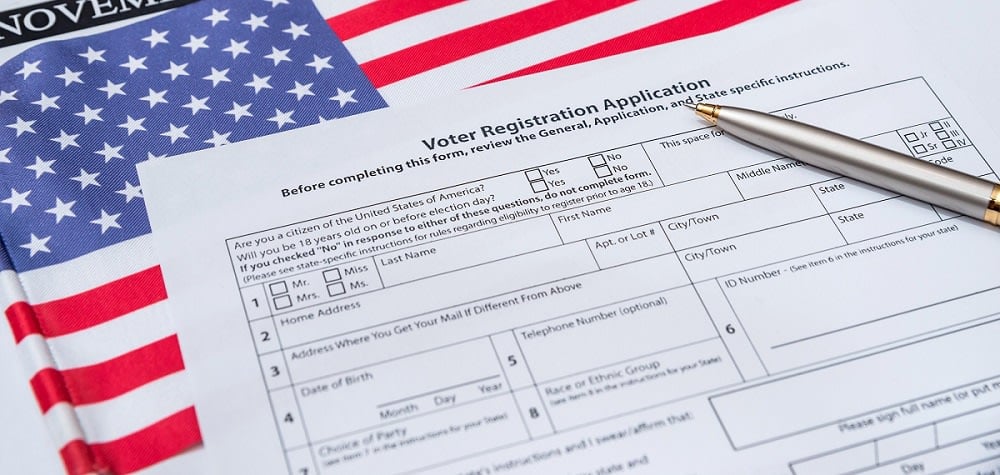
The unredacted voter rolls the DOJ is seeking do contain highly sensitive voter data. While some voter record information — like a voter’s partisan affiliation and the elections they’ve voted in — may be publicly available, complete voter files often contain sensitive personal data that is not publicly disclosed. Depending on the state, publicly available and restricted fields may include:
- Full names
- Addresses
- Birthdates
- Driver’s license numbers
- Partial Social Security numbers
Voter files may show whether someone participated in an election, but they do not reveal whom that person voted for.
The Feds Want State Voter Records: The Controversy and What the DOJ Alleges
The DOJ claims it needs the voter files to assess compliance with federal voter-roll maintenance laws and identify potentially ineligible voters — specifically people without U.S. citizenship. Voter-roll maintenance laws require states to keep voter registration records up to date as people relocate, change their names, become eligible to vote, or die.
The DOJ cites a few federal laws to support its requests for state voter data:
- The National Voter Registration Act, which requires states to make certain voter-roll maintenance records available for public inspection
- The Help America Vote Act of 2002, which mandates states to maintain computerized statewide voter registration databases
- The Civil Rights Act of 1960, which authorizes the attorney general to demand access to certain preserved election records through a written request stating its basis and purpose.
While the DOJ has invoked these laws to justify its demands, courts have rejected its interpretation in the cases decided so far.
What’s Going on in California?
The controversy over voter fraud and noncitizen voting has become particularly visible in California, where a related but separate lawsuit has been filed.
The Trump administration recently sued California election officials, seeking to prevent the state from counting mail-in ballots returned by roughly 20,000 voters, who the federal government flagged as "likely" noncitizens, until their citizenship status can be determined. The lawsuit stems from California's refusal to act on a DOJ request that election officials review a password-protected thumb drive containing the names of the 20,000 voters.
Escalating tensions further, the DOJ cautioned election workers in the state, stating that knowingly counting ballots cast by noncitizens could lead to federal investigation and charges.
California officials deny claims of widespread voter fraud, arguing that such cases are extremely rare and that the federal government doesn’t have sufficient evidence to support these allegations. They also note that previous federal attempts to identify noncitizen voters have been fruitless, citing a botched effort in Nevada in which nearly 200 flagged individuals were ultimately confirmed as U.S. citizens.
Just days after the lawsuit was filed, federal authorities arrested and charged 28 lawful permanent residents in California on charges that included submitting fraudulent voter registrations, making false statements on naturalization applications, and others. Not all defendants were accused of voting illegally. Among those arrested was Omar Alexander Muñoz, a lawful permanent resident whose wife told AP that they had not realized he was registered to vote. She also described him as a strong Trump supporter.
Why States Are Resisting
Election administration has historically been a state responsibility, leading many states to assert that the DOJ’s request signals government overreach and unnecessary federal involvement.
Many states, even some Republican ones, are pushing back, arguing that supplying the feds with unredacted voter rolls could create significant privacy and cybersecurity concerns for millions of registered voters. More than 227 million Americans were registered to vote during the 2024 presidential election. That’s a lot of data on a lot of people.
Some state officials have also pointed out that the Trump administration has not adequately explained how it intends to protect the data.
States refusing to turn over the data have cited their own confidentiality laws, while challengers to DOJ’s nationwide program have also relied on federal privacy and administrative law protections. The October 9 ruling found violations of the Privacy Act and Paperwork Reduction Act.
What Should Voters Know About the DOJ Requests?
The DOJ requests and subsequent lawsuits — especially what we’re seeing in California — go beyond voter fraud allegations. This controversy raises broader concerns about:
- Who controls statewide voter registration lists
- How much personal information the federal government should be allowed to collect
- How election integrity efforts should be balanced against Americans’ privacy rights
The outcome of these lawsuits could affect both voter privacy protections and threaten state control over elections. The key takeaway is that this debate is about more than rooting out noncitizens who are registered to vote or have voted. It’s also about who has access to your sensitive voter data and how that information is used and protected.