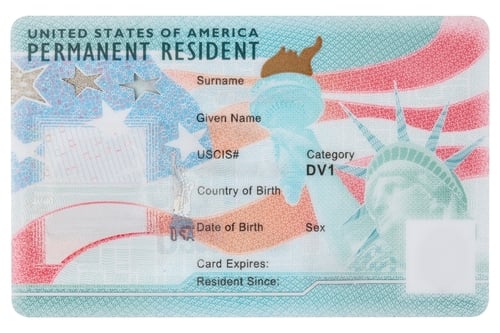
States and cities are suing to stop a new Trump administration rule that could make it riskier for some immigrants seeking green cards to use public-benefit programs. They argue the policy is too broad and unclear and could lead eligible families to avoid food, housing, and health assistance for fear it will hurt an immigration application.
During the first Trump administration, a new rule under federal immigration law addressing the public charge rule went into effect in 2020. A coalition protecting immigrants’ rights, led by New York State Attorney General Letitia James, challenged and blocked it in court before the Biden administration reversed it in 2021. With a new version of the public charge rule issued on July 16, 2026, and set to take effect on September 18, the Department of Homeland Security (DHS) is once again attempting to institute a major change in green cards and U.S. immigration policy. And once again, the matter is heading to the courts.
On September 14, 2026, a pair of lawsuits were filed in federal court opposing the Trump administration’s attempt to allow U.S. Citizenship and Immigration Services (USCIS) employees to consider enrollment in public benefits programs when determining green card applications. AG James filed one suit on behalf of a coalition of 22 states and the District of Columbia, while a group of large American cities and counties led by New York City Mayor Zohran Mamdani filed the other. Seeking to block the rule’s implementation, the complaints argue it violates the Administrative Procedure Act, exceeds DHS’s statutory authority, and fails to explain how the policy should be administered.
DHS predicted that the public charge regulation change may cause as many as 950,000 noncitizens to either unenroll from or not apply for federal public benefit programs for fear of being denied green card status. The lawsuits claim it would have a “chilling effect” on lawfully present immigrants and keep them from using programs like school lunches or housing assistance. Given the approaching deadline for it to take effect, whether a block will be granted again should be known sooner rather than later.
Public Charge Policy: What Is It?
Noncitizens don’t have unlimited access to public assistance programs. While specifics can change between administrations, the basic principle behind the Public Charge Rule is that an immigrant or noncitizen likely to become primarily dependent on the government for subsistence can be denied admission or lawful permanent residence (LPR). Officials can find an applicant inadmissible if they believe the person is likely to become a public charge at any point.
Before the change made in 2020 by the first Trump administration, USCIS excluded enrollment in non-cash government benefits such as Medicaid or the Supplemental Nutrition Assistance Program (SNAP) from the Public Charge Test determination process. Those changes resulted in reduced enrollment in such programs among individuals not subject to the Public Charge ground of inadmissibility, such as U.S. citizen children in mixed-status families and households, before being rolled back in 2021.
A noncitizen's access to benefit programs depends on their immigration status. “Qualified” noncitizens, such as LPRs, refugees, asylees, and certain victims of human trafficking, may be eligible for Supplemental Security Income (SSI), HUD housing programs, and other types of public aid, but must often meet other requirements as well. Those bringing the lawsuits fear the DHS estimate is correct and that almost a million people will forgo aid for food and shelter because of possible green card repercussions from a public charge determination.
Oh Look, Another Extremely Divisive Topic
The issuance of the new public charge rule in July aligns with the aggressive immigration policy that serves as the centerpiece of the current administration. It introduces uncertainty about federal aid programs and green card status, and may well lead to the same enrollment declines previously seen.
The complaints seek to prevent that by asking a court to vacate the rule as “arbitrary and capricious” and as departing from the longstanding meaning of the public charge provision established by Congress. For the states’ lawsuit, New York AG James is joined by the attorneys general of California, Colorado, Connecticut, Delaware, Hawaii, Illinois, Maine, Maryland, Massachusetts, Michigan, Minnesota, Nevada, New Jersey, New Mexico, Oregon, Rhode Island, Vermont, Virginia, Washington, Wisconsin, and the District of Columbia, along with the governor of Pennsylvania. NYC Mayor Mamdani's suit includes Chicago, San Francisco, Seattle, King County in Washington, and Santa Clara County in California.
The back-and-forth rule changes between the administrations can be exhausting. For noncitizens, it may be a good time to discuss with an immigration lawyer the pros and cons of applying for any public benefit while the status of the rule remains uncertain.