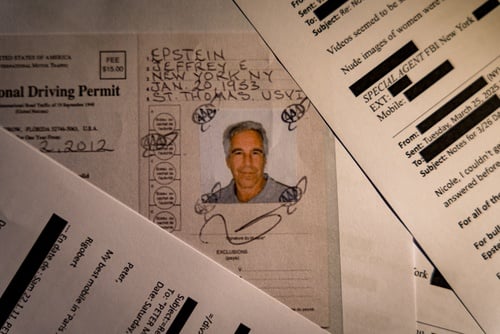
In the seven years since his demise, the 2019 death of accused sex trafficker Jeffrey Epstein in a Metropolitan Correctional Center prison cell has remained a hotly debated topic. The NYC Medical Examiner, Dr. Barbara Sampson, ruled his death a suicide by hanging. However, skeptics have long contended that Epstein was instead a victim of homicide. This belief will likely intensify after a forensic expert with access to Epstein’s autopsy records announced that the cause of death appears to be homicidal strangulation instead. Is that enough to change the official ruling of suicide?
A death investigation identifies both the cause of death (the injury or disease responsible) and the manner of death (such as suicide, homicide, accident, natural death, or undetermined). Challenging a suicide ruling generally means challenging the manner of death, although the cause may also be disputed.
While it can vary due to state and local law, successfully challenging a manner of death ruled to be suicide requires more than suppositions and belief that “they would never do that.” In most cases, you must introduce new, credible evidence that was either previously unavailable or overlooked. Other details matter as well, such as whether an autopsy was performed and what information is contained in the medical examiner’s file.
It’s often extremely difficult to try to comprehend why someone would choose to take their own life, even more so when the decedent is a loved one. There are ways to encourage those in charge to take another look at the cause of death, but it often depends on the situation and the details involved with the case. Even if it doesn’t involve the numerous doubts raised by events surrounding Epstein’s death, you can question whether someone actually killed themselves and seek information to prove the ruling was incorrect.
Did They Consult Dr. Quincy? How About Ducky Mallard?
A licensed physician, medical examiner, or coroner usually determines the cause and manner of death. While TV shows and movies featuring forensic pathologists can lead us to believe that most people end up in a morgue with a big “Y”-shaped incision down the front of their body, the truth is much closer to the opposite. Data from a 2018 study showed that only around 8% of all deaths in the U.S. included an autopsy as part of the death investigation, which may seem low to some people. Why so few?
Many expected natural deaths are certified without an autopsy. Autopsies are more common when a death is unexpected, or when there are signs of foul play, usually uncovered during law enforcement investigations into a suspicious death. Issues such as possible medical malpractice will often result in an autopsy, as will any unexplained death involving a federal prisoner or concerns over an infectious or contagious disease. In most states, those with proper authority can order an autopsy when warranted, even over the objections of the family. Even when autopsies are conducted, there’s no guarantee the cause of death will be correctly identified if it’s due to something unexpected.
There are numerous reasons as to why not everyone who passes gets an autopsy. These include cost, a shortage of forensic pathologists, and some hospitals no longer offering autopsy services (or being completely closed). Law enforcement is more likely to request an autopsy if there’s some question about what appears to be a suicide, such as defensive wounds, signs of a physical struggle, or confirmation of a drug overdose. Autopsy evidence can either confirm a suicide or open the door to other possible causes of death.
Expanding the Investigation
The Epstein case recently had Dr. Michael Freeman, the editor-in-chief of the Journal of Forensic and Legal Medicine, cast doubt upon the original autopsy report by questioning ligature marks visible in the autopsy photos. While most of us won’t have someone as high-powered on our side when trying to question or change a suicide ruling, there are still viable options available.
In most states, family members can request an autopsy, although they may have to bear the cost. If the coroner or medical examiner refuses to conduct one, immediate family members can have a private autopsy conducted by an independent forensic pathologist. A family may also seek an independent forensic pathologist’s review of the available autopsy findings and investigative records. A fresh set of eyes on the autopsy file may uncover inconsistencies that could lead to a change in the cause of death.
Challenging a death ruled as suicide after a law enforcement investigation may have difficulty gaining traction unless you have discovered new evidence that’s both credible and relevant to the case. Start by requesting a meeting with whoever led the investigation. Having a summary of why it wasn’t suicide to support any new evidence will be helpful. Even if you believe the investigators overlooked something they shouldn’t have, try to focus on the facts when presenting your argument and avoid being accusatory. If you encounter resistance or indifference, it might be time to send a formal letter outlining what you’ve discovered to a supervisor or higher-ranking official. In some instances, hiring an attorney may offer your best chance of success.
While the process may make working through your grief more difficult, uncovering how someone close to you actually passed may provide some sorely needed peace of mind.