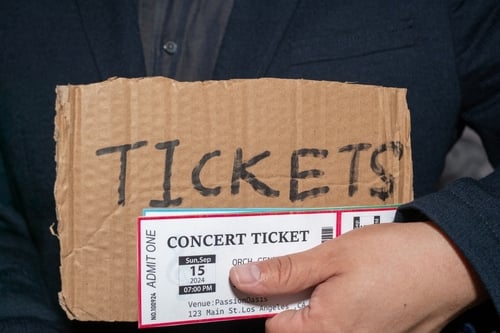
Plenty of passionate fans are willing to fork over money to see their idols live in concert and offer exuberant vocal support. Will they cheer as loudly for the ticket resellers suing the District of Columbia for imposing price caps on the live-event secondary market? Well, it might be an instance where you’ll be fine leaving your earplugs at home.
Secondary ticket market agencies claiming to be allies of ticket buyers probably isn’t on many people's 2026 bingo card, but here we are. In a lawsuit filed on October 16, 2026, in the U.S. District Court for the District of Columbia, the National Association of Ticketing Professionals (NATP), along with ASC Ticket Company and Stage Front Tickets, Inc., accused the Council of the District of Columbia of illegally approving a ticket resale price cap through the Restricting Egregious Scalping Against Live Entertainment Act (RESALE ACT). Effective January 1, 2027, the RESALE Act caps the resale price at 10% above the initial total price, including original fees and taxes. A resale marketplace may charge an additional service fee of up to 10% of that initial total.
The complaint alleges that the RESALE Act’s price cap violates the Fifth Amendment’s due process and equal protection guarantees, the dormant Commerce Clause, and the D.C. Home Rule Act. The plaintiffs seek a preliminary injunction to block enforcement of the cap, followed by a permanent injunction after a final judgment. While the complaint casts primary ticket sellers like Ticketmaster and Live Nation as the real villains, the resellers may face a tougher sell in the court of public opinion: A cap on ticket markups could sound like sweet music to the ears of D.C. concertgoers.
Bonus Points for the Use of ‘Egregious’
For fans, nothing beats seeing their favorite performer live. However, getting tickets often proves to be at least one of two things: difficult or expensive (or both). With the shift to electronic ticketing and the advent of bot-assisted programs, high-demand shows can sell out in minutes, or even seconds. For example, fans snatched up more than two million tickets for Taylor Swift’s The Eras Tour in about 24 hours, and K-pop group EXO allegedly sold all 67,000 tickets for one 2017 tour date in 0.2 seconds.
Platforms like SeatGeek, StubHub, and TickPick offer fans who bought tickets but can’t attend a show a safe marketplace to resell their passes, less a service fee. These ticket brokers, along with the plaintiffs, also handle tickets snatched up by bot-assisted buyers before fans could purchase them, with markups that some consider exorbitant. Some estimates claim that as much as 80% of the tickets offered on their site come from professional resellers, rather than fellow fans.
D.C. Law 26-181 gives the Department of Licensing and Consumer Protection authority to enforce certain legal standards for the resale of live venue tickets. Targeting the resellers’ market, the RESALE Act imposes a number of restrictions. It bans commerce in speculative tickets, requires full transparency on all costs associated with reselling tickets, targets technology that bypasses ticket-buying limits, imposes a 10% cap on a ticket’s original price, and mandates that anyone listing 50 or more tickets annually in the District must have a license and post a $25,000 surety bond. It also established that violations of the RESALE ACT would be classified as an unlawful trade practice and a Class 2 civil infraction.
Okay, but Will This Make It Easier To Get Bluey’s Big Play Tickets?
The lawsuit alleges that the resale market is the only real protection consumers have against Live Nation Entertainment (of which Ticketmaster is a subsidiary), the primary ticket sellers. It claims that RESALE Act restrictions will effectively neutralize resellers' ability to compete with the primary seller through the secondary market. Without ticket brokers like StubHub, Ticketmaster and Live Nation can use selling tactics like dynamic pricing, which raises ticket costs based on supply and demand. After being sued by the Department of Justice (DOJ) for “engaging in anticompetitive conduct,” Live Nation Entertainment settled in March 2026.
The complaint alleges that the RESALE Act’s price cap violates the Fifth Amendment’s Due Process Clause because it is unconstitutionally vague and its equal-protection guarantee because it favors primary ticket sellers over resellers. It also argues that the cap violates the dormant Commerce Clause by improperly regulating transactions outside the District and exceeds the D.C. Council’s authority under the Home Rule Act.
The suit argues that consumers will suffer harm because the RESALE Act's “unconstitutionally vague” tenets won’t allow resellers to create another competitive marketplace. It also cites the amount of money saved by attendees who paid less than face value for a certain number of resale tickets. The study does not note how much money was spent on brokered tickets above face value.
The RESALE Act promises relief from steep ticket markups, but the plaintiffs argue that its price cap will limit legitimate resale options and overstep the District’s authority. Perhaps fortunately for the plaintiffs, fans won’t decide those legal questions. For now, the resellers will have to make their case to a different audience: a federal judge.