
Back in April, hobby distillers won a round in their fight against the federal ban on making spirits at home. That was in the Fifth Circuit, and you can read more about the case in our previous article.
But another federal appeals court soon reached the opposite conclusion. Now, the Supreme Court has agreed to settle the disagreement in Department of Justice v. McNutt. What began as a fight over backyard stills has become a test of how far Congress can go to protect federal tax collections.
Another Distiller, a Different Result
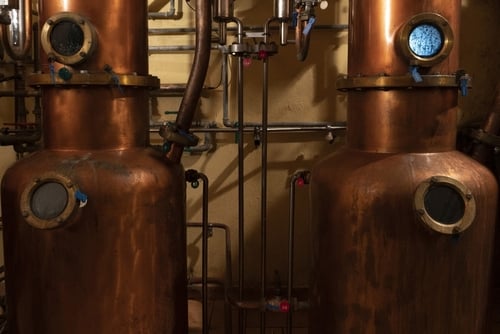
The other challenge comes from John Ream, an Ohio resident who wants to add distilling to his repertoire. According to his Supreme Court petition, Ream is a former aerospace engineer who opened a brewpub after years of homebrewing. He says he studied distilling, selected recipes, and picked out a five-gallon copper pot still costing about $600. Ream says he wants to make whiskey for himself and his wife, would register with the federal government, and would pay the applicable taxes. But he hasn’t purchased the still because of the legal risks.
As a refresher, federal law prohibits producing beverage spirits in a home or connected yard or shed and prevents those locations from being registered as distilled spirits plants. Violations can carry up to five years in prison and a $10,000 fine. Unlike home-produced beer and wine, spirits have no federal personal-use exemption.
Ream sued in January 2024. A district court initially found he lacked standing, partly because he hadn’t bought a still. The Sixth Circuit disagreed on standing but upheld the ban. That April 21 ruling came just eleven days after the Fifth Circuit struck down the same restrictions in McNutt.
Same Tax, Opposite Logic
Both appeals courts considered the same constitutional question: Does Congress’s power to tax distilled spirits also allow it to ban people from making them at home? The government defended the ban under the Necessary and Proper Clause of the U.S. Constitution, which lets Congress pass laws to carry out its expressly granted powers, including collecting taxes.
But the Fifth Circuit wasn’t buying it. It reasoned that banning home distilling stops people from making spirits the government could otherwise tax. In the court’s view, shutting home producers out of the legal system does not help collect taxes from them; it prevents that potential tax revenue from being generated in the first place.
The Sixth Circuit, however, saw another side of the ledger. If people can’t make spirits at home, they may buy commercially produced spirits instead. Those purchases generate revenue through a system in which production is easier to monitor and tax. The court therefore accepted the restriction as a necessary and proper means of collecting the spirits tax.
The Supreme Court will now consider that disagreement by reviewing the Fifth Circuit’s decision (not the Sixth Circuit’s ruling in Ream’s case) with the government asking it to uphold the restrictions.
What Was Congress Trying to Fix?
Ream’s lawyers questioned whether the ban’s history supports its stated purpose. Their petition describes an 1867 congressional report documenting extensive tax evasion by commercial distillers. According to their account, the spirits tax exceeded the product’s market price, making bribery cheaper than compliance.
Congress responded in 1868 by lowering the tax and changing collection rules. But Ream’s lawyers say Congress adopted the home-distilling prohibition without recorded debate or evidence connecting it to that commercial fraud. Their point: Congress was addressing a documented problem with commercial distillers, but the justification for banning home production was far less clear.
A Bigger Fight Waiting in the Wings
Ream’s lawyers also asked the Supreme Court to reconsider the 2005 marijuana-regulation case of Gonzales v. Raich. In that case, the Court held that Congress could apply federal drug laws to marijuana grown locally for personal medical use – even though it wasn’t being sold. The reasoning was that Congress could regulate home production as part of its broader regulation of the interstate marijuana market.
Why bring up marijuana in a case about whiskey? Both involve people making something for personal use rather than buying or selling it. Ream’s lawyers argue that Raich gives Congress too much power to regulate those activities under its authority over interstate commerce.
But that is a broader question than the one the justices agreed to hear in McNutt. The case before them asks whether Congress can justify the home-distilling ban as a way to collect federal taxes. The Court has not agreed to decide whether Raich should be overruled.
Don’t Raise a Glass Just Yet
If you were enthused about making your own hooch, tread carefully; the Supreme Court review is a reason to pay attention – not permission to fire up a still. Even a ruling against the location restrictions would not automatically erase other federal production requirements or override state and local rules.
For now, Ream’s whiskey-making plans remain on hold. What the justices decide could determine not just where Americans can make their spirits, but how far Congress’s power to collect taxes reaches into their homes.


