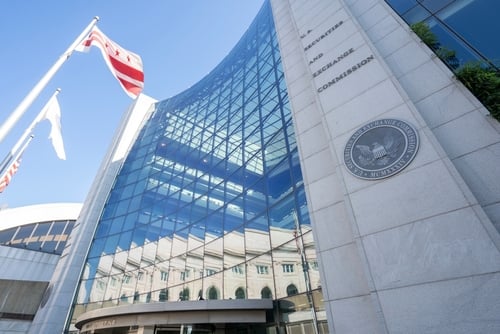
Last week, the U.S. Securities and Exchange Commission released a report that continued a downward trend in SEC enforcement actions. The SEC filed 348 enforcement actions in its 2026 fiscal year, down about 24% from the year before. The prior year had fallen about 22% from 583 enforcement actions.
The SEC said it’s reporting lower numbers because it’s choosing to work differently and more effectively. However, some politicians called the trend evidence that the SEC is stepping back from enforcement under the Trump administration.
Here’s How The Numbers Shake Out
During its first full fiscal year (October 1 to September 30) under Chairman Paul Atkins, the SEC brought 348 total enforcement actions, the fewest since 1991, according to a Reuters review of agency statistics. Those included 235 stand-alone actions, down 22% from the previous year. Those totals include both civil actions filed in federal court and administrative proceedings brought by the SEC. Here’s how those numbers shake out.
Fiscal Year 2025
- 456 total actions
- 303 stand-alone actions
- About $17.9 billion in fines and other financial remedies (but about $14.9 billion came from one case — the Stanford Ponzi scheme). Adjusted, it was roughly $2.7 billion.
Fiscal Year 2026
- 348 total actions
- 235 stand-alone actions
- Nearly $1.1 billion in disgorgement and prejudgment interest, as well as civil penalties
A great place to look at the details of SEC enforcement activity is the Securities Enforcement Empirical Database (SEED), a collaboration between the NYU Pollack Center for Law & Business and Cornerstone Research. You can run a search there if you want to really dig into the numbers on SEC enforcement actions filed against public companies traded on major U.S. exchanges and their subsidiaries.
SEC Says It’s Not Acting Less — Just Differently
Since Republicans began leading the SEC in January 2025, they’ve generally argued that too much enforcement stifles business and punishes the shareholders of publicly held companies. As the head of the agency, Paul Atkins has criticized the enforcement approach under former Chairman Gary Gensler as opaque, unpredictable, and driven by headlines.
Atkins said in a statement Tuesday, "Enforcement actions and financial remedies are important measures of activity, but they are not the only or most telling measures." The SEC stresses that the number of cases it brings is an incomplete measure of enforcement effectiveness. The success of the SEC’s enforcement program should be measured by how successfully it has advanced its mission, protected investors, held wrongdoers accountable, and strengthened confidence in the markets.
In the past year, the SEC has made what it calls “significant organizational enhancements,” including creating a Retail Fraud Working Group and a Financial Reporting and Accounting Unit. The retail fraud group targets schemes that hit everyday investors, like Ponzi schemes and impersonation scams. And the SEC says it has already produced more than a dozen new investigations accordingly. The accounting unit pairs lawyers with accountants to catch financial reporting fraud earlier in the process.
SEC Says AI Can Improve Enforcement Efficiency
Part of the SEC’s answer to “why fewer cases?” is technology. The agency says it created a new Office of Super Intelligence and Analytics. (“Super intelligence” is what the SEC calls AI.) The goal of this new office is to find fraud sooner while using fewer resources by doing things like:
- Spotting unusual trading patterns earlier
- Reviewing documents and transcripts faster
- Tracing money through blockchain and other financial flows
Of course, it’s important to keep in mind that the SEC is talking about technology. But nothing in the report released last week attributes the drop to the use of AI. The report doesn’t disclose whether those tools generated any kind of efficiency. That might be something to look for in next year’s report.
The Midterms Are Over. What Will the Next Two Years Hold for the SEC?
The SEC wasn’t on the ballot this November, but the mid-term elections could still change how it operates. Congress doesn’t run the SEC, but it oversees it. Lawmakers hold hearings, approve the agency’s budget, and can demand records and answers from its leaders. With Democrats expected to take control of Congress, that oversight is likely to get tougher.
Massachusetts Democratic Sen. Elizabeth Warren, who is expected to lead the U.S. Senate Banking Committee next year, said in a statement on Tuesday that the SEC's data "shows enforcement cases and penalties dropped to a historic low this year, with cases down 40% and financial penalties down nearly tenfold compared to 2024. The new Democratic majority in Congress will closely scrutinize whether the Atkins SEC is protecting the American people — or working for scammers and Trump's billionaire buddies on Wall Street.”
What can the new Democratic majority actually do? Mostly ask questions. Warren has already pressed Atkins at a February hearing and wrote him in April to question whether his testimony was accurate. What Congress can’t easily do is force the SEC to bring more cases. New laws will need the president’s signature or a veto-proof majority.
The debate will likely come down to one more question: Is the SEC bringing fewer cases because it’s being more selective or because it’s doing less? The figures show that the SEC is filing fewer enforcement actions and obtaining less monetary relief. Whether its narrower approach is protecting investors more effectively is a separate question the annual totals don’t answer.