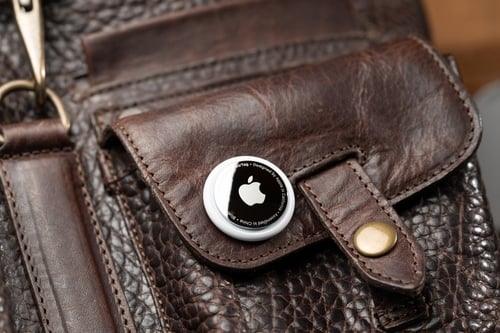
An AirTag can be a lifesaver when your keys disappear into the couch or your checked bag takes an unscheduled vacation. The Find My app can help you locate both. It’s a win-win because, well, your keys and bags don’t need boundaries.
Other humans, however, do. Tuck an AirTag into someone else’s purse or car without their knowledge, and the legal analysis changes fast — sometimes with criminal consequences. AirTags are not GPS trackers in the traditional sense, but they can still reveal location data through Apple’s Find My network. That is why they can be useful to find your own property, and why they can also be misused by stalkers or other people trying to secretly track people.
When an AirTag Becomes Illegal Tracking
Apple itself warns that using an AirTag to track someone without consent is a crime in many places. The legal risk rises sharply when a tracker is hidden in something that travels with another person, like their vehicle or backpack. At that point, the legal question may shift from tracking an item to tracking the person carrying it.
Consent is usually the key question. Just because you are dating, married, related, share a car, or pay for the same phone plan does not automatically mean you have permission to track someone else. The applicable state law and specific circumstances still matter.
A shared family vehicle, for instance, may raise different legal issues than secretly hiding a tracker in a spouse’s personal car during a separation. In Florida, for example, consent to a tracking device is presumed revoked if either spouse files for divorce or seeks a protective injunction against the other.
State Laws Are Not All Alike
State laws governing private location tracking vary widely and may use terms such as “electronic tracking device,” “GPS device,” or “mobile tracking device” — language that can cover an AirTag depending on the statute and facts. In practice, an AirTag may raise many of the same legal questions as traditional GPS tracking devices, even though it works differently from a standalone GPS tracker.
As of a September 2022 National Conference of State Legislatures survey, at least 26 states and Washington, D.C., had addressed privacy concerns involving private location tracking. Some treat unauthorized tracking as stalking or harassment; others focus on secretly placing a tracker on someone else’s vehicle or property, or using a device to determine someone’s location without consent.
Some state laws include exceptions for law enforcement, employers, parents or guardians, private investigators, and commercial or fleet uses, but their scope varies. Do not assume an exception applies simply because of your relationship to the person or property.
Because these laws can change, check the current statute in the relevant state before relying on a general overview. The key takeaway: there is no single nationwide “AirTag law.”
What Is More (and Less) Acceptable
Using an AirTag to locate your own luggage, bicycle, keys, or other belongings is generally the least legally risky use. Some state laws also include employer, commercial, or fleet-use exceptions, although their scope varies.
The risk increases when an AirTag is attached to property that regularly travels with another person. A parent’s use of a tracker on a minor child’s belongings may be treated differently under some state laws, but the relevant statute and any court order matter.
Among the riskiest uses are hiding an AirTag in a partner’s car, a coworker’s purse or bag, or anyone else’s personal property without their knowledge. Depending on the state and circumstances, that conduct can raise tracking, stalking, harassment, workplace-law, or invasion-of-privacy issues.
Ownership, Alerts, and Safety
Ownership, a shared phone plan, or a relationship does not necessarily resolve whether tracking is lawful. Custody disputes, separations, and protective orders can add legal complications.
Apple and Google support unwanted-tracking alerts on compatible devices when an unfamiliar Bluetooth tracker appears to be moving with someone over time. An AirTag may also make a sound, and Apple provides tools to identify or disable an unknown tracker. But alerts may not be immediate, and they do not make secret tracking lawful.
If you find an unfamiliar AirTag moving with you and believe you are in danger, contact 911 or local law enforcement. Apple says you can view the tracker’s serial number and other identifying information in the Find My app, and it recommends documenting that information before disabling the device if possible. An AirTag is associated with its owner’s Apple Account—formerly called an Apple ID—which can help law enforcement investigate reports of unwanted tracking. Apple’s guidance explains the available steps.
The bottom line: next time you think about placing an AirTag on anything that regularly travels with someone else, ask yourself a simple question: Would I be comfortable telling that person it is there? If the answer is no, keep that little Bluetooth breadcrumb to yourself.