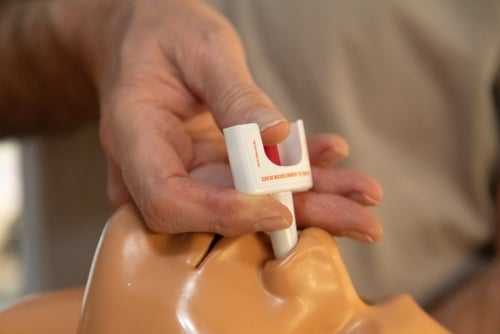
Modern medicine has an answer for some opioid overdoses: naloxone, including the brand Narcan. When given in time, naloxone can rapidly reverse an opioid overdose and restore normal breathing. A systematic review of community naloxone programs estimated that 97.3% of people who received naloxone survived.
Even with that lifesaving drug, though, a person may still need emergency medical care, so public-health guidance urges bystanders to call 911 whenever they suspect an overdose. Virginia has a Good Samaritan law that can provide immunity from certain drug-possession charges when its statutory requirements are met after emergency medical help is sought for an overdose.
But a recent case considered the limits of that protection: When someone else calls 911 out of concern that a person may be overdosing, can the person later charged with drug possession claim Good Samaritan immunity if they were not actually experiencing a life-threatening overdose?
‘Oh, Thank Heaven’?
Late one night in 2023, a 7-Eleven employee in Louisa County, Virginia, found Jamie Nicole Garrett slumped over in a running car outside the store. After the employee woke Garrett, Garrett said she was okay. But about 30 minutes later, Garrett was still in the car with her head tilted back, prompting the employee to call 911 and ask that someone check on her.
The employee did not report a suspected overdose. She testified that she did not know whether Garrett was asleep or using drugs, had not seen signs such as convulsions or gagging, and did not believe the situation appeared life-threatening.
When officers arrived, they found evidence of drug use in the vehicle and later recovered approximately 0.8 grams of methamphetamine from Garrett’s purse. She was charged with possession of a Schedule II controlled substance.
The Case for Immunity
Before her trial, Garrett asked the Louisa County Circuit Court to dismiss the drug-possession charge under Virginia Code § 18.2-251.03, Virginia’s Good Samaritan or overdose-reporting law. The law can provide immunity from certain drug-possession charges when emergency medical help is sought in good faith for a person experiencing an overdose. The statute defines an overdose as a life-threatening condition caused by drugs, alcohol, or both.
Garrett argued that she qualified because the 7-Eleven employee called 911 out of concern for her. The trial court disagreed, finding that Garrett was under the influence but not experiencing a life-threatening condition. It denied her request to dismiss the charge.
Garrett then entered a conditional guilty plea, which allowed her to appeal the denial of Good Samaritan immunity. She appealed to the Virginia Court of Appeals. The issue on appeal was what it means to be “experiencing an overdose” under the statute.
Garrett argued that immunity should apply if the caller reasonably believed (or sincerely believed) that the person was overdosing. The Commonwealth argued that Garrett had to show she was actually experiencing a life-threatening overdose when emergency help was sought.
Sticklers for the Statute
The Court of Appeals agreed with the Commonwealth. It held that Good Samaritan immunity requires proof of an actual overdose. A caller’s good faith matters, but it does not replace the requirement that the person receiving help was, in fact, experiencing a life-threatening condition caused by drugs, alcohol, or both.
The court treated whether Garrett was experiencing an overdose as an objective factual question, not a question about what the employee believed or what a hypothetical reasonable person might have believed. In the court’s words, the statute protects a person who “is experiencing an overdose.” The court concluded that this means the person must actually be undergoing a life-threatening condition when emergency medical help is requested. A suspected overdose, reasonable concern, or honest mistake is not enough.
The court also noted that Virginia lawmakers have used belief-based wording in other statutes. Some laws refer to a person who is “reasonably believed” to be in danger or “believed” to be experiencing an overdose. This statute does not. The court reasoned that it could not add that missing language itself.
Garrett woke when the employee knocked on her car window and responded with a thumbs-up when asked whether she was okay. She later woke again when officers arrived, got out of the vehicle on her own, and spoke with police and emergency personnel. The detective said Garrett was breathing and did not administer naloxone, often called Narcan. Garrett also declined the medical treatment emergency personnel offered.
Those facts did not mean Garrett was sober or unaffected by drugs. The court accepted that she was impaired. But it held that the evidence supported the trial court’s conclusion that she was not in the life-threatening condition the statute requires.
What the Ruling Means
For Garrett, the ruling means her Good Samaritan immunity claim failed. The Court of Appeals affirmed the trial court’s refusal to dismiss the possession charge, leaving in place Garrett’s conditional guilty plea to possession of a Schedule II controlled substance and her three-year sentence, which the trial court suspended in full.
For Virginians, the decision defines an important limit on the state’s Good Samaritan law. A person seeking immunity from a qualifying drug-possession charge must show that they were actually experiencing a drug- or alcohol-related, life-threatening overdose when emergency help was sought. A bystander’s honest concern, or even a reasonable belief that an overdose may be occurring, does not by itself satisfy that requirement.
The ruling does not say people should wait for proof before calling 911. The court interpreted the requirements for criminal immunity after the fact; it did not question the public-health advice to seek emergency help whenever an overdose is suspected. But it does mean that the availability of Good Samaritan immunity will now turn on evidence of the person’s actual medical condition.