
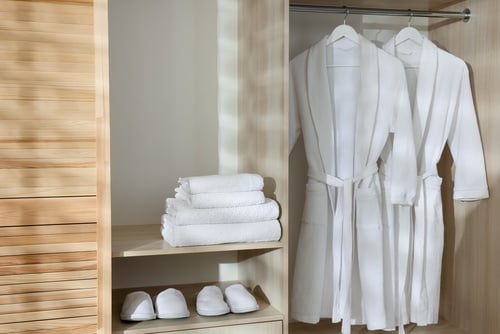
Maybe it was an accident, or maybe you just really appreciated how plush the towel in your hotel room was. Either way, it ended up in your luggage and is now next to your shower at home. An unexpected but pleasant souvenir from your trip. Just don’t be surprised if it shows up as a charge on your next credit card bill. How did they know?
While motels, hotels, and resorts (hotels) offer travelers a temporary home away from home, that doesn’t mean their contents are ripe for plundering. To aid in combating hotel theft by their guests, some establishments have started adding tiny tracking chips to robes, towels, and bed linens. Sensors let them know when textiles are removed from the premises and which room they were taken from. Since your credit card is on record, the facility bills you for it. You may even get a cheeky email letting you know and congratulating you on your “purchase.”
Is that legal? While taking single-use toiletries, pens, and postcards from your hotel is generally expected, it doesn’t give you permission to consider everything in the room as freebies included in the rate. While it can include written terms and your signature, the transaction between a guest and the hotel is a mutual contractual agreement, with you agreeing to the location’s rules. In general, helping yourself to an expensive robe is not part of the deal.
Maybe You Should Check the Fine Print at the Bates Motel
Whether oral or written, the transaction between a hotel and a guest is a binding contract consisting of mutual promises. The lodging is agreeing to provide the promised accommodations at an agreed-upon rate. The guest is required to pay and abide by the rules of the establishment. You may agree to the hotel’s terms by clicking a box online or signing at the front desk, but it becomes a binding agreement once you make a reservation or receive the key. For example, consider a hotel’s cancellation policy. If you violate the agreed-upon terms, the hotel can charge you a fee for breaking the contract.
The hotel may have its rules posted online, in the main lobby, or in its rooms. Guests can expect privacy, a room that’s at least reasonably what was promised, and the contracted rate. Some states have additional requirements. For example, hotels in Florida must meet sanitation standards set by the Department of Business and Professional Regulation (DBPR), while locations in Texas with security cameras must have signage indicating their presence.
In return, guests are expected to abide by the hotel’s rules. These should be posted where a guest can see them and can include the following:
- Quiet hours
- Check in/Check out times
- No smoking rooms
- Pets/Service animals
- Visitor policies
It’s also common to include a damage and liability clause that outlines your responsibility for any property damage caused. The person who entered into the agreement with the hotel is on the hook for anything damaged or stolen in the room, regardless of who did it. While hotel chains may have overarching rules for their affiliates, local laws may also apply.
Do the Towels That Feel Like Sandpaper Get Chipped Too?
While hotels do their best to keep vermin out, any electronic bug in its robes and towels is there on purpose. The tiny radio-frequency identification (RFID) tags are sewn into textiles. Sensors at exits can detect whether chipped sheets, towels, or robes are taken off the premises and pinpoint which room they came from. The hotel can then alert you to the removal, charge the card on file, or both. Inventory can also be checked by hotel employees, usually by housekeeping.
While it may sound like overkill to some, this isn’t the first use of technology by hotels to charge guests. In addition to manual checking, some hotel minibars use pressure pads, microswitches, or electronic scales to determine when mini bottles or food items have been removed. Still, technology doesn’t always make it clear what you can and can’t legally take from your hotel room.
In some instances, it’s easy to know. Some hotels will post prices for certain items on a small sign, usually next to the beds. There may be a sign in the bathroom encouraging guests to help themselves to small bottles of shampoo, body wash, conditioner, and other mini toiletries, but those items are generally fine to take. Since it would be unsanitary to leave a used bar of soap, a razor, a toothbrush, or a shower cap for the next guest, you’re unlikely to run into an issue if you take them with you. Disposable slippers will be thrown out after use, but plush, leather-soled pairs will likely need to be purchased. Pens and notepads are usually branded and fine to take.
It’s fine to take any extra tea and coffee packets from your room, but don’t plunder the coffee station in the lobby. Leave the coffee maker where it is, along with other items that clearly belong to the hotel, such as lamps, blankets, decorative items, hangers, and pillows. Electronics like hair dryers, tablets, and the TV remote should be left behind as well (and don’t take the batteries, which is evidently a thing that happens).
With bathrobes retailing in some hotels between $50 and $288(!), it’s not surprising that countermeasures against their theft by guests are scaling up in complexity. If you desperately feel the need to take some sort of souvenir from your hotel room, you won’t get charged for grabbing a Bible from the nightstand.


