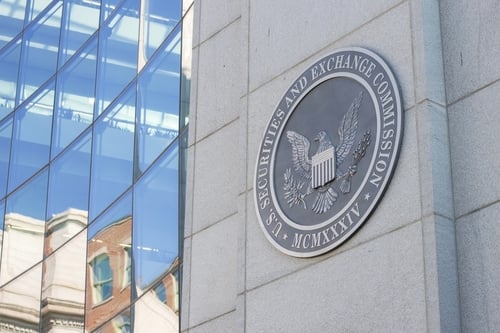
The SEC has created a temporary pathway for certain regulated platforms to trade blockchain-based versions of U.S. stocks. The program allows qualifying venues to use crypto-style technology, but it does not remove investor protections or broader securities-law requirements.
Through a program referred to as the "Innovation Exemption," the SEC is enabling "onchain secondary trading" — meaning the buying and selling of assets directly on a blockchain. In plain English, this involves digital tokens that represent real shares of major, everyday companies like those you would normally see on the New York Stock Exchange.
SEC’s Crypto Experiment
On September 17, the SEC issued an order granting temporary, conditional relief — specifically known as the TSV Exemption — to Tokenized Securities Venues (TSVs), which are newly defined, SEC-approved digital trading platforms. This provides a temporary pass from strict exchange registration laws, provided they follow specific safety rules.
These TSVs facilitate permissioned trading, meaning a closed system where buyers and sellers must pass identity and compliance checks, of Tokenized NMS Stock, digital blockchain tokens that directly represent shares of major publicly traded companies. The SEC defines an NMS stock as any standard national market security other than an option. This trading occurs through automated market makers (AMMs), computer programs that automatically set prices and match trades, and liquidity pools, centralized digital pots of assets that traders can instantly buy from or sell into.
The order also grants a Dealer Exemption, which provides conditional relief from the strict legal definition of a “dealer,” a heavily regulated classification for businesses that regularly trade securities for their own account. The exemption loosens restrictions on certain liquidity providers, the individuals or companies who deposit their own assets to ensure enough inventory exists for trading. This rule applies when a company or individual puts its own money or tokenized stocks into a trading pool to help ensure people can buy and sell, even if they engage in traditional dealing activities like quoting specific buy or sell prices or providing committed capital by locking funds into a contract to guarantee trades. It does not provide a general pass from otherwise applicable securities laws.
These two exemptions — which together make up the Innovation Exemption — are effective now through September 17, 2031. The SEC has requested public comment on potential modifications and possible next steps.
The SEC order allows qualifying platforms to use blockchain-based trading tools commonly found in crypto markets. These tools use automated computer programs, called smart contracts, to enforce the trading rules and help set token prices based on the assets held in the trading pool.
Instead of matching buyers and sellers through a traditional trading system, an AMM uses code and a shared pool of assets to execute trades. Only approved users can participate. The platform sets the rules for who can join, and eligible users may include individual investors, large institutions, and broker-dealers.
Limits and Qualifying Assets
The overall framework applies to “Tokenized NMS Stock” tokenized by, or on behalf of, the issuer of the underlying stock, or by an unaffiliated third party. A qualifying token must provide its holder with the exact same rights and privileges as holders of traditional NMS stock in an equivalent class, such as receiving dividends and exercising voting rights. The exemption does not cover crypto products created by an unrelated company that only track or mimic a stock's value. For example, it does not apply to a token that rises or falls with a company’s share price but does not give its holder actual ownership rights in that company.
A TSV must meet numerous conditions to use the TSV Exemption. In addition to verifying participant access and shareholder rights, it must be a U.S. entity that complies with federal economic sanctions and avoids employing anyone with a statutory disqualification. The platform has to use public, auditable smart contracts, respect strict limits on trading volumes and available securities, and halt trading if the underlying stock stops trading on its primary market. Finally, the TSV must maintain transparent public records of its operations, report cyber events, and is strictly prohibited from offering margin trading, loans, or extending credit.
Added safeguards apply when a stock token is created by an unaffiliated third party. Before listing it, a TSV must give written notice to the issuer of the underlying stock and wait at least 30 calendar days. If the issuer objects in writing during that period, the TSV may not make the token available for trading.
What the Order Does Not Do
The order does not take tokenized-stock activity outside the federal securities laws. Anti-fraud and anti-manipulation laws continue to apply to securities activities conducted on a TSV.
The TSV Exemption applies only to activity performed through the systems and functionalities provided by the TSV. Securities activity outside the TSV may remain subject to registration requirements and other federal securities-law requirements.
The order also does not provide a carve-out from applicable Securities Act registration requirements for securities transactions. A TSV or TSV participant must still comply with registration requirements that apply to its activities, or qualify for a separate, unrelated regulatory exemption.
Finally, the relief is not a permanent move to put U.S. equities wholesale onto the blockchain. It is a temporary, five-year framework while the SEC gathers public feedback and considers whether further regulatory action is appropriate.