
It’s easy to talk about ourselves, so why is it so hard to write about ourselves?
If you’re like most people, writing a bio can be an intimidating, awkward exercise that commonly results in some frustration and frequent taps on the backspace key. While it may be difficult to figure out what you want others to know, a captivating attorney bio prominently displayed on your website and social media profiles gives readers a quick glimpse into the kind of professional — and person! — you are.
In the age of social media and reviews, you can’t just be a good lawyer anymore. You have to be good at talking about it. Here’s where to start.
1. Do your research
The first step to take when writing an engaging bio is to do some research. Look at the biographies of respected attorneys in your field or even your favorite author or successful entrepreneurs. Simply reading how others crafted their bios is a great way to draw inspiration and find out what you want — and don’t want — to include in yours. Make sure you’re also looking in multiple places like Facebook and LinkedIn. It’s helpful to see how people use different platforms and a limited number of characters to their advantage.
2. List your priorities
Now it’s time to grab the pen and paper. This sounds like a no-brainer, but start by writing down your name, job title and firm information. Then list five to eight things you’d like to include. Some topics to consider include:
- Prior work experience
- Recent recognition
- Community service
- Family facts
- Hobbies or interests
The most important thing to remember when making your list is to keep your audience in mind. Write for your clients, not your fellow attorneys. Your bio shouldn’t be a resume, but rather a narrative. What do you want them to know about you? Maybe you’ve won an award or been recognized in a publication recently. Or maybe you’ve been selected to a Super Lawyers list. People want to know they’re working with a reputable and trustworthy professional. Make sure that shines through, along with your personality.
Here’s an example of an attorney bio that mixes the professional with the personal:
About Cara Carter
Backed by more than 12 years of experience, Cara Carter has extensive knowledge in estate planning and probate law. As a senior attorney at Johnson & Craig PLLC, Cara focuses on wills, trusts and transfer on death deeds. Prior to her current role, Cara was an associate attorney, with experience in civil appeals and real estate. Cara has recently been recognized in Newsweek and in 2015 won the American Lawyer Awards, honoring her outstanding performance in the legal profession.
After hours, Cara can be found running and biking and enjoys spending time outdoors in her spare time. She is married to Michael and has two children, Aislyn and Lee. For more information, reach out to Cara at caracarter@jc.com or (555) 555-1234.

3. Capture the details
Make sure you capture all of your experience, major accomplishments, and your human side, but be brief about it. Don’t use this space to go in depth about your life as a law student or a specific case you won. People don’t want to spend a lot of energy reading about you when they’re searching online, so respect their time. A good rule of thumb is to keep your bio between 300 to 500 words. It’s enough to cover the important details without losing a prospect to a page full of text.
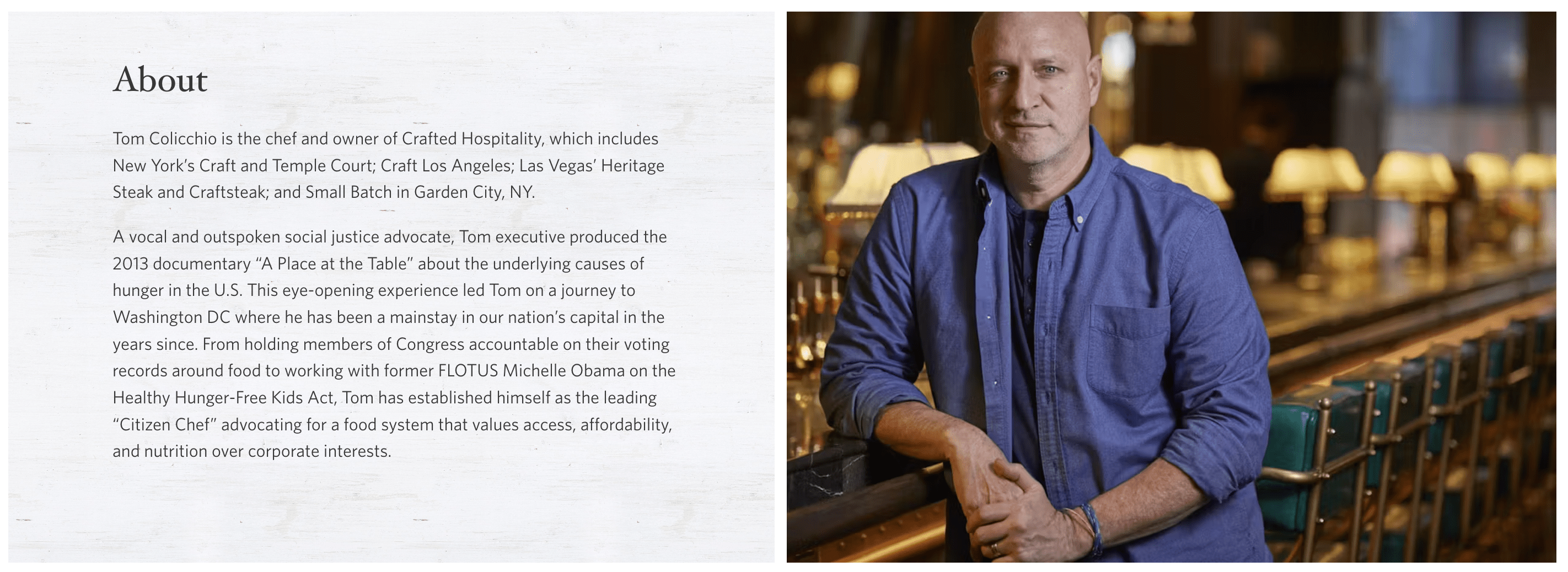
Celebrity chef Tom Colicchio uses his bio to discuss current and past work, professional accomplishments and some personal tidbits in a little over 300 words.

4. Include contact info
The point of your bio is to give people a reason to contact you. Provide them with an easy way to get ahold of you. Have your email or phone number prominently displayed so prospects can get in touch with you directly.

If you’re writing a bio for your social media accounts, include a link to your homepage, latest blog post, or a special campaign to connect people to the heart of your firm’s content.
In this example, Scott offers two different ways to get ahold of him directly. While you may only want to provide a phone number to your firm’s front desk, a clear call to action should be present next to your bio.
5. Put a face to the name
Don’t let the time you spent writing an engaging bio go to waste. While your prospects will appreciate reading about you, they also want to see you. Include a professional headshot so people can put a face to your name. Poet Rupi Kaur brings bright colors to her headshot to call attention to her bio.

Another thing to remember: Maintain it! Your bio isn’t something you only write once. As a successful professional, your career is continually evolving so don’t let your bio go stale. Put a reminder on your calendar every six months to review your content and see what kind of information you can add to it.
Write your attorney bio today
Now that you know the steps, it’s time to start writing. Follow these tips as you begin your adventure to create a compelling biography that prospects will want to spend time reading.
For more inspiration, download our free professional bio template below, then check out our hub of downloadable resources to further optimize your law firm’s marketing efforts.


Related blog posts
-

March 1, 2024 | 4 min read
Matching an attorney bio with an appropriate headshot
How to choose the best headshot for your law firm website, including tips on background, clothing, lighting, and more.
-

August 3, 2023 | 10 min read
How to get more clients for my solo law firm
A sixteen section primer guide for solo attorneys. The industry's best insight to win more business from a seasoned consultant, Mike Brown.


